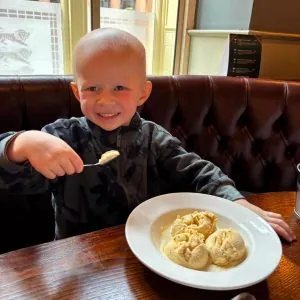
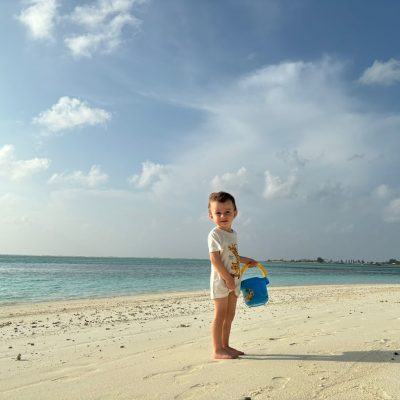
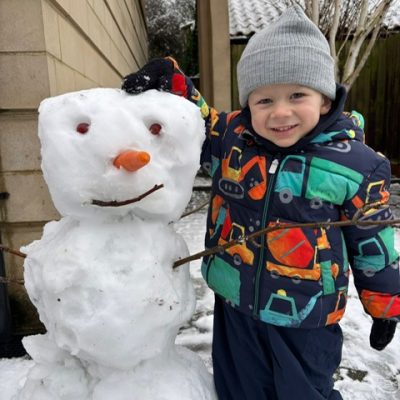
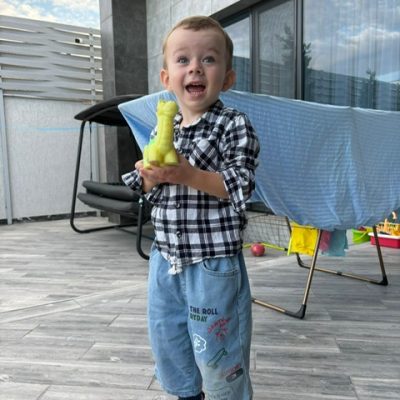
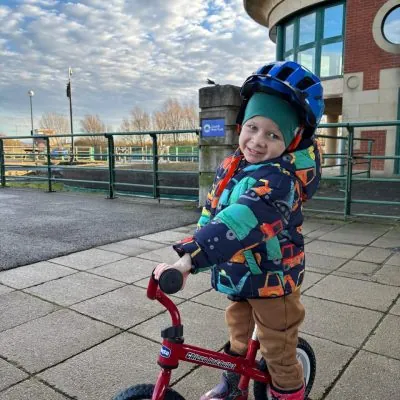
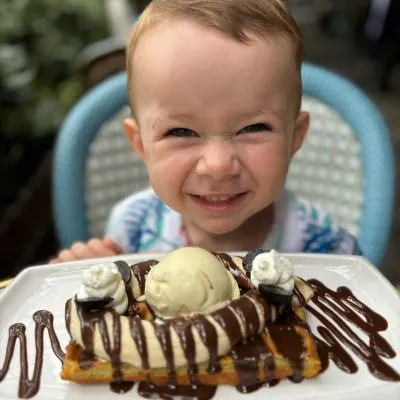
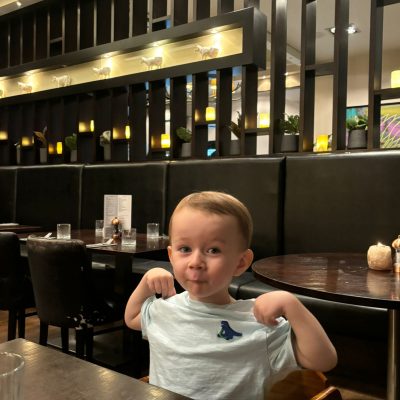
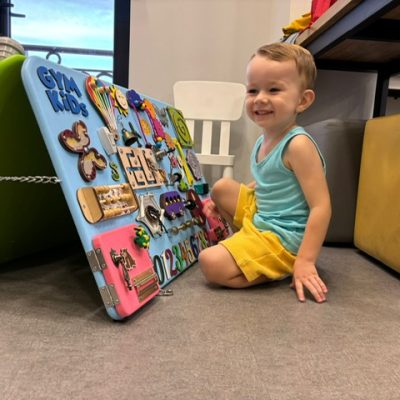
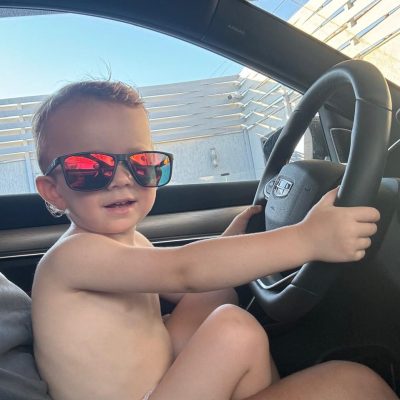
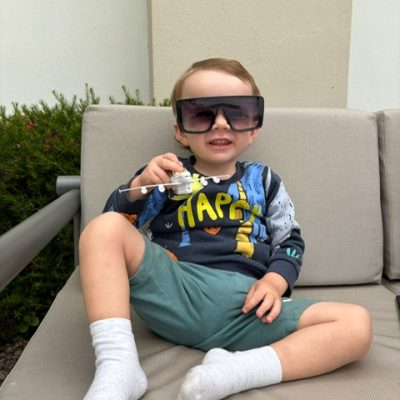
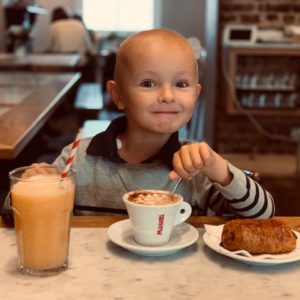
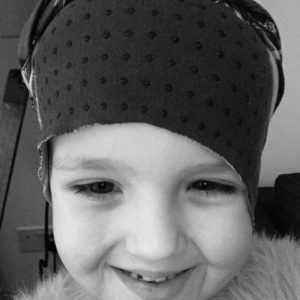
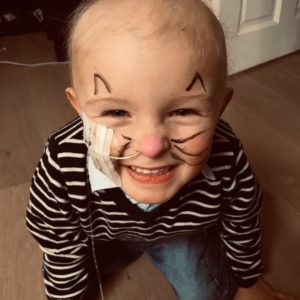
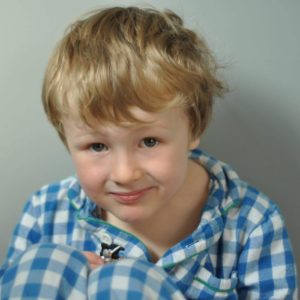
Our son Leo was a bright, joyful, and endlessly active little boy — full of energy, laughter, and life. He was just weeks away from turning three when our world changed forever. In the months before his diagnosis, Leo’s appetite slowly faded. He was occasionally sick and seemed more tired than usual. At the time, we could never have imagined these were early signs of something so serious. In early October 2024, one morning we woke up and I noticed that Leo’s left eye was slightly closed. We were immediately worried and sought medical help. We were given different possible explanations and provisional diagnoses, including viral conjunctivitis and Bell’s palsy. But none of them felt right. After a private MRI revealed a mass behind Leo’s left eye, close to the sinus, we knew we needed urgent specialist care. Within just a few days we packed our lives into suitcases, bought plane tickets, and flew to England. Almost as soon as we landed, we received an email with the news we had been dreading: based on the MRI images, what had been found was most likely consistent with rhabdomyosarcoma.
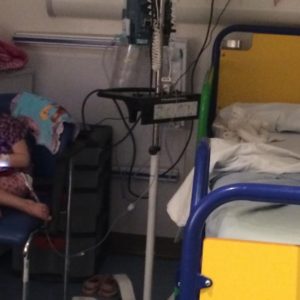
In London, Leo was admitted to Evelina London Children’s Hospital, where the first urgent investigations began, including an emergency CT scan. Soon after, a decision was made to transfer Leo to the Royal Victoria Infirmary (RVI) in Newcastle. Over the following days, he underwent further investigations and tests, including repeat MRI imaging and a biopsy. By the end of October 2024, the diagnosis was confirmed: localized high-risk embryonal rhabdomyosarcoma, with the primary site in the left maxillary sinus and parameningeal extension.
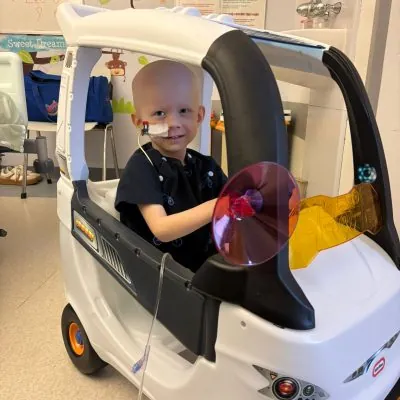
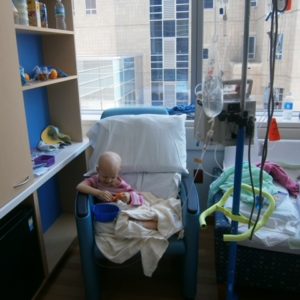
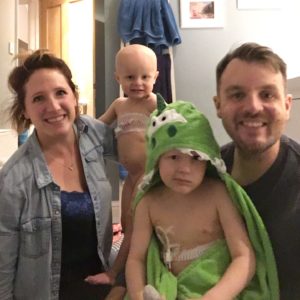
Leo began frontline chemotherapy as soon as the diagnosis was confirmed. His upfront treatment included nine cycles of chemotherapy, with drugs such as ifosfamide, vincristine, and actinomycin. He responded well and had very few side effects. Throughout most of the treatment, vomiting was rare, and he was able to eat normally on his own without needing an NG tube. Over the entire course of treatment, he was only admitted to hospital with a fever a couple of times, and those admissions were mostly due to neutropenia. Within weeks, his eye gradually opened again. Further ophthalmology testing later confirmed the heartbreaking news that the vision in that eye could not be restored. As devastating as that was, it did not change our purpose — our only mission was to fight for Leo’s life with everything we had. From January to February 2025, Leo underwent proton beam radiotherapy in Manchester. Because of his age, he had to go under general anaesthesia every day for each session, and he also had to be nil by mouth beforehand. It was incredibly hard for us as parents to watch, and because we couldn’t truly explain to him why all of this was happening, the only thing we could do was hold his hand and do everything we could to keep him calm and safe.
As difficult as that period was, we spent the time in Manchester as fully as we could. We felt incredible support from the medical staff at The Christie Hospital, and most importantly, Leo was supported and cared for with so much kindness. In many ways, that month became one of the warmest parts of our journey. After treatments, we could still have small moments of “normal” life — visiting playrooms, walking in the park, going to museums. And it still comforts us to remember that, even in pain and uncertainty, Leo never stopped finding joy in the little things.
In April 2025, just before what should have been Leo’s final cycle of chemotherapy, he began to seem more tired than usual. He developed headaches, and he started vomiting — which was very unusual for him. We contacted our team in Newcastle immediately, explained what was happening, and brought Leo in to be examined. At first, we were told it could be a stomach virus, or possibly delayed side effects from radiotherapy. But I had a terrible feeling — the same kind of feeling I had at the very beginning, when I knew something serious was being missed. An MRI was already scheduled for early May, and that scan confirmed our worst fears. Leo had relapsed. It was a leptomeningeal relapse of his initially localized embryonal rhabdomyosarcoma — widespread and rapidly progressive. We were told Leo likely had only weeks to live. After that, we still wanted to try. We discussed starting relapse therapy, and Leo was being considered for the CT3FAR-RMS protocol as our plan for treatment. But to begin a new relapse protocol, he would have needed yet more investigations and tests. In the condition Leo was already in, it felt like too much for his little body to endure. Very quickly his health worsened. He began having seizures, he was vomiting relentlessly, and he was in severe pain. We could no longer watch our little boy suffer. We made one of the hardest decisions of our lives: to bring Leo home, away from hospital walls, to surround him with love and comfort. He was held close by his family — his mum and dad, his grandparents, and his little three-month-old brother.
On 18 May 2025, Leo left this world and went to a place where there is no more pain. Leo faced more than any child ever should, yet he remained brave, gentle, and deeply loved. His life was far too short, but his light, his strength, and the love he gave will stay with us forever.