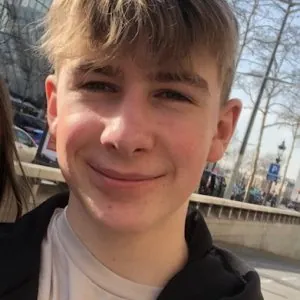
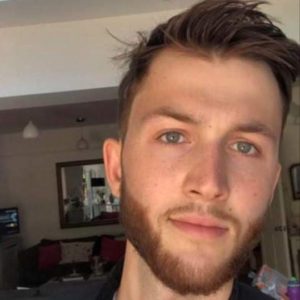
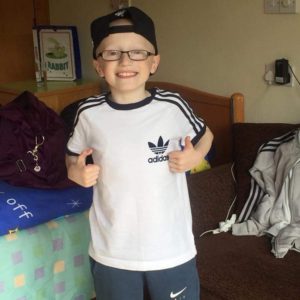
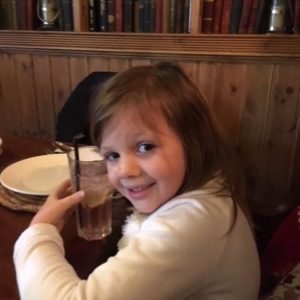
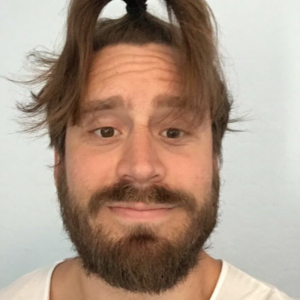
Harry was a typical 17 year old boy, he loved hanging out with his friends and older brother Freddie, playing X box, nice clothes – spending his money wisely on his favourite brands, going to the gym and relaxing with his family and beloved dog, Cookie. He had a dry sense of humour, was well mannered and very chatty, getting on with people from all walks of life and all ages. Harry was studying A levels in Business Studies, Economics and Psychology and wanted a career in business, he was already well versed in the art of delegation when it came to jobs at home and using his time efficiently!
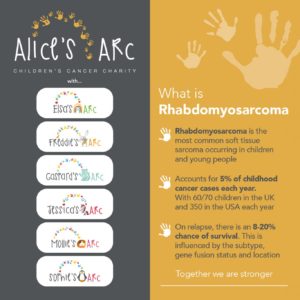
Harry had 2 part time jobs – One at the National Trust and the other as a cleaner at his school. It was after one of his cleaning sessions that he noticed his vision was blurred. After a long 20 hour stint in A&E at Gloucester hospital and multiple scans, a “mass” was identified in Harry’s nose and behind his eye. Very quickly we were taken under the care and guidance of the Teenage Cancer team at Bristol Royal Infirmary and Harry underwent several gruelling tests to determine what type of cancer he had. Having not really had cancer in the family before, we’d never heard of Rhabdomyosarcoma but quickly understood what a rare and aggressive type of cancer it was. Harry’s primary site was in his nasal cavity and behind his eye (hence the blurred vision) but had spread to the lymph nodes in his neck.
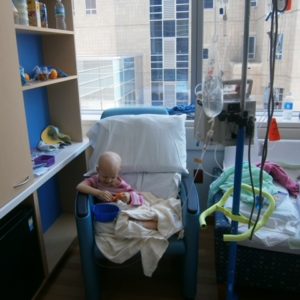
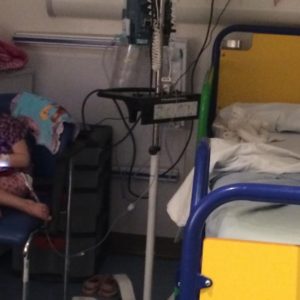
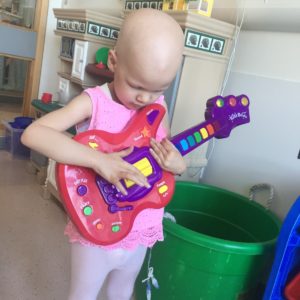
Harry quickly started 9 rounds of IVADO chemotherapy which meant we were staying in Bristol hospital every 3 weeks for 3-4 days. Treatment and side effects seemed brutal with sickness, mouth ulcers, disturbed sleep and routine, but Harry took it all in his stride, toughed it out and got on with whatever was thrown at him.
Issues with an ongoing temperature and high heart rate in June prompted a scan of Harry’s heart. This identified a clot on Harry’s heart, probably from the PICC line insertion and he had to spend 2 weeks in adult cardiology. As you can imagine this was not an ideal place for a 17 year old to be and we pushed against doctors advice to get him home and to progress with next stages of treatment.
As well as chemotherapy, Harry had 6 weeks of proton beam radiotherapy at UCLH in London. The location of the tumour was too close to his eye to operate so it was hoped the proton therapy would zap any remaining cancer.
Given treatment on his neck would impact his ability to eat, Harry had to have a RIG (feeding) tube inserted into his stomach. Having worked so hard on getting a six-pack this was a particularly painful procedure. Harry also needed to be fitted with a mask to wear during proton therapy to hold him still as it was imperative the radiation targeted the cancer and didn’t damage any surrounding cells.
The side effects on return from London didn’t appear to be abating within expected timeframes and chemotherapy was postponed by a couple of weeks. Harry managed to complete all nine cycles but continued to suffer with increasing sickness and fatigue.
Despite trying to return to school and “normal life” it was quickly apparent he was not well enough and he went for follow up scans where we received the devastating news that the cancer had spread to the meninges round his brain.