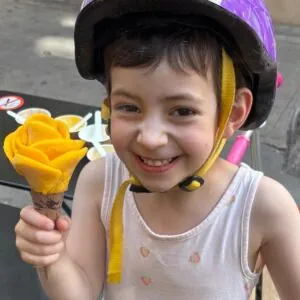
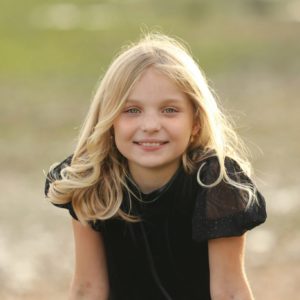
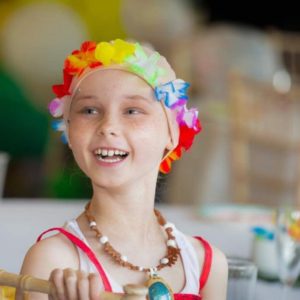
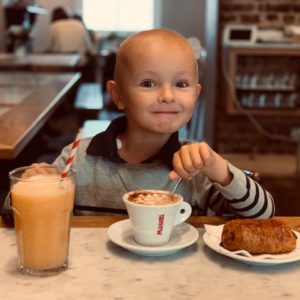
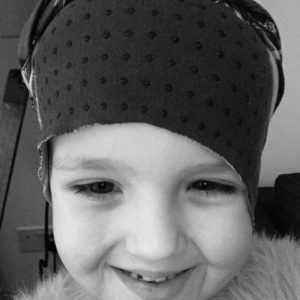
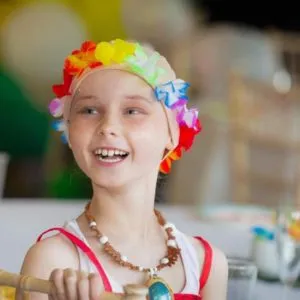
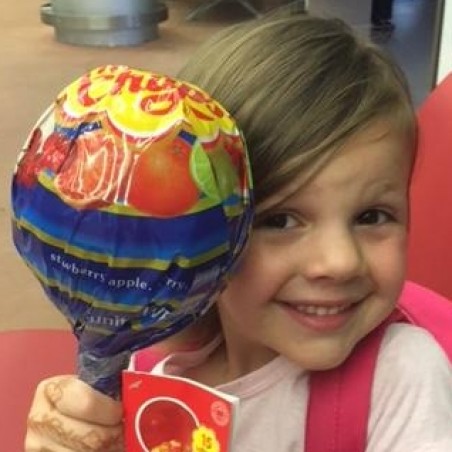
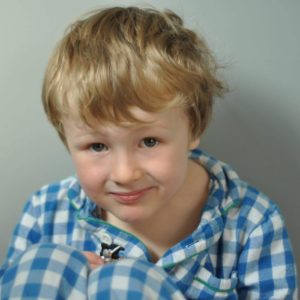
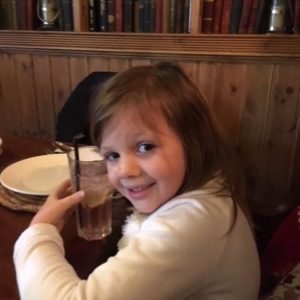
Emma filled every room she walked into. She was funny, curious and full of energy. She loved singing and dancing, adored Paddington and princesses. She was happiest when surrounded by the people she loved. Whether she was writing stories, making people laugh or sitting around the dinner table chatting with family, she approached life with enthusiasm and joy.
She was also incredibly caring and remarkably resilient. Even when faced with challenges that would overwhelm most adults, Emma somehow found a way to keep smiling, keep learning and keep looking forward to the next adventure. She often talked about wanting a job where she could help and rescue people one day. That was Emma.
The summer before her diagnosis was one of the happiest we could remember. We spent it in Pornic, France – Emma’s happy place. She celebrated her third birthday there, surrounded by sunshine, family and everything she loved – ice cream, croissants and her family. She was her usual bubbly, energetic self. Looking back, there were tiny signs that something wasn’t quite right. Her voice sounded a little nasal and she had started snoring at night despite not having a cold. We mentioned it to the GP and pharmacist, but both reassured us it was likely a minor viral infection or blocked sinuses. We had no reason to think otherwise.
When we returned home in September. It was then we found a lump in Emma’s neck. Again, we were reassured it was probably linked to an infection. To be on the safe side, we were sent to paediatric A&E, where Emma had her first cannula fitted. I will never forget holding my little girl while she screamed in pain. The doctors explained that enlarged lymph nodes were common in young children and that there was nothing to suggest anything serious. Emma had no other symptoms. She was eating normally, full of energy and running around as she always had. An ultrasound appeared reassuring. She was given intravenous antibiotics followed by oral antibiotics and we continued attending review appointments.
For weeks, we heard the same message. Nothing to worry about. But we could see the lump growing every day. Eventually, before another scheduled review, we pushed for a further scan. This time everything changed. The scan revealed a large mass in Emma’s neck and we were referred to Great Ormond Street Hospital. Even then, we struggled to believe anything serious could be wrong. Emma looked so well.
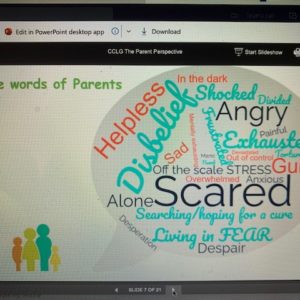
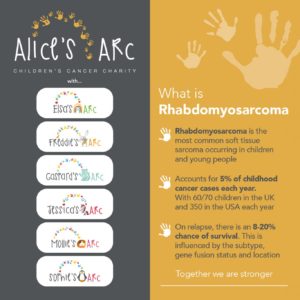
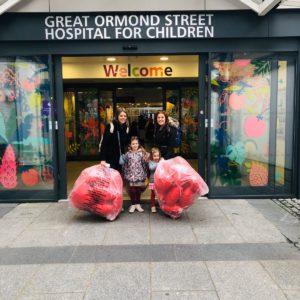
At Great Ormond Street, events moved quickly. Emma underwent an MRI under general anaesthetic, followed by a biopsy. I can still picture the room where we were given the diagnosis. Until that moment, we had clung to the belief that there would be another explanation. Emma was still laughing, playing and filling every room with energy.When the consultant told us it was rhabdomyosarcoma, it felt as though we couldn’t breathe. We had never heard the word before, but we understood the word that came after it: cancer. Everything changed in an instant. One moment we were planning nursery days, birthdays and family adventures. The next, we were being introduced to treatment plans, central lines and chemotherapy.
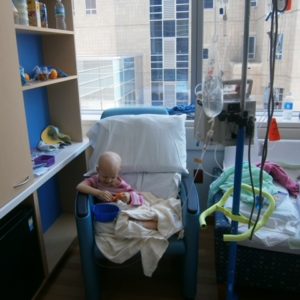
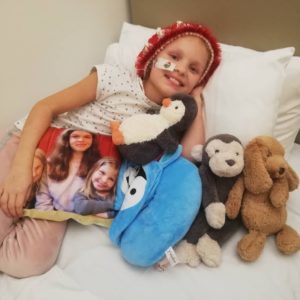
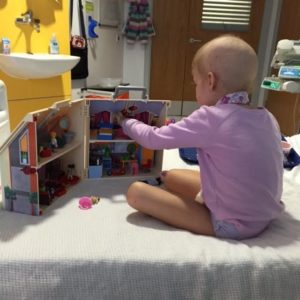
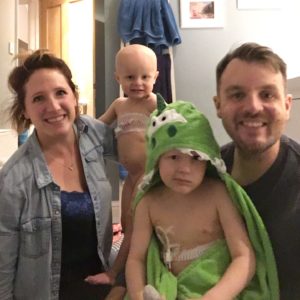
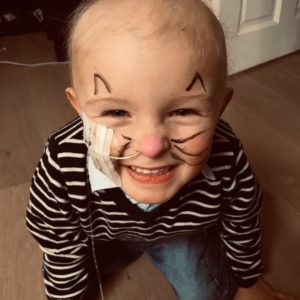
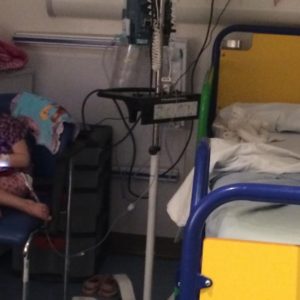
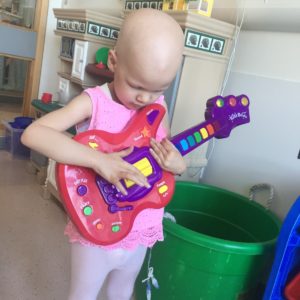
Two days later, Emma had a central line fitted and began treatment immediately. By that point, the tumour had already caused paralysis on the right side of her face. The chemotherapy worked quickly and the tumour began shrinking almost immediately. But further investigations revealed a suspicious mass on her spine. After weeks of review by specialists across the country, it was concluded that the cancer had most likely spread and Emma’s treatment plan changed to one designed for metastatic disease. Suddenly, our lives revolved around hospital appointments, scans and treatment schedules. Emma lost her hair after her first round of chemotherapy. Because of the tumour’s location, surgery was not possible. Instead, she underwent nine rounds of chemotherapy and 28 sessions of radiotherapy under general anaesthetic.
One of the brightest moments during treatment was the arrival of her baby sister, Claire. In the middle of hospital appointments, chemotherapy and uncertainty, Claire brought joy. Emma loved being a big sister from the very beginning. Despite everything she was facing herself, she was endlessly caring towards Claire. Watching them together was a reminder that cancer had not changed who Emma was. She was still the same loving little girl she had always been. When treatment ended and scans showed no evidence of disease, we finally allowed ourselves to hope. Maintenance chemotherapy meant more time at home and less time in hospital. Emma returned to nursery, spent time with friends and her cousins and started enjoying childhood again. Her central line was replaced with a port, meaning she could finally have baths and go swimming once more. For a short while, life felt a little lighter.
Then came the relapse. A biopsy unexpectedly found cancer cells in scar tissue despite clear scans. There was no visible tumour on MRI. All we could do was wait. We spent months hoping there had been some mistake, desperately wishing the cancer had not returned. Instead, we found ourselves in the impossible position of waiting for it to grow enough for doctors to treat it. During this time, we travelled to the Princess Máxima Centre in the Netherlands because it represented something we desperately needed: hope. Emma immediately loved it there. The music room, toys, bicycles and play specialists brought her much happiness. While we worried about scans, treatment plans and impossible decisions, Emma remained focused on the things children should be focused on – playing, laughing and having fun. When scans later confirmed tumour growth, Emma became eligible for AMORE treatment at the Princess Máxima Centre. AMORE is a highly specialised treatment combining major surgery with targeted brachytherapy. It was invasive, carried significant risks and required us to place our trust in a treatment that was not available to Emma through standard NHS care pathways in the UK. As parents, it was a daunting decision. But our options were becoming increasingly limited and we were determined to explore every possibility.
Emma faced the treatment with the same courage and determination she showed throughout her cancer journey. The road afterwards was not easy, but the treatment was successful. It gave us something priceless. Time. Time for school days and holidays. Time for family adventures. Time for laughter, memories and moments that we will treasure forever. Most importantly, it gave Emma more time to be a child. It was followed by 11 more rounds of chemotherapy, which became increasingly difficult for Emma. She suffered severe stomach pain, diarrhoea, a complete loss of appetite and significant weight loss. Eventually she required feeding through a PEG tube and became very weak. Yet one thing never changed. Her love of school. School became Emma’s happy place. She loved learning, loved being with her friends and loved being part of everyday life. Whenever she was well enough, she wanted to be there. Her determination to keep going despite everything she was facing inspired everyone around her.
By early 2025, treatment had become so difficult that doctors decided the risks of continuing outweighed the benefits. Her final planned cycle of chemotherapy was cancelled. Slowly, Emma began to recover. We enjoyed holidays, days out, Disneyland and precious time together as a family. Her PEG and port were removed. She returned to school and regained some of her strength. We knew there was a significant risk the cancer would return, but we hoped for time.
Then, in July, our world changed once again. Emma came home from school with paralysis on the right side of her face – the same symptom she had experienced at diagnosis. We knew. Even before the scans confirmed it. An emergency MRI revealed another tumour. Surgery was performed to relieve pressure and remove as much of the tumour as possible. Afterwards, we were told there were no longer any curative options. The focus would now be on slowing the cancer and giving Emma the best possible quality of life.
Shortly afterwards, we returned to France one final time.Emma’s happy place. Deep down, we knew it would be our last visit there together. The months that followed were some of the hardest of our lives. But they were also filled with love and memories. There was camping, Halloween celebrations with friends, a safari park visit, a holiday in the New Forest, a pamper day, a day as a nurse, time with firefighters and a magical day with Santa. Even while living with pain and uncertainty, Emma remained determined to make the most of every moment.
As the cancer progressed, the Palliative Care Team provided extraordinary support at home, helping to manage Emma’s symptoms and allowing us precious time together as a family. In November, scans confirmed the cancer had spread to her brain. We knew time was running short. We brought Emma home, where she was surrounded by cuddles, love and the people who mattered most.
One day she quietly said:
“Mummy, I feel different. My body feels different. I used to run and climb, now I’m just tired. I don’t feel like doing the things I used to love.”
No parent should ever hear those words from their child.
As she became increasingly sleepy and unwell, she was transferred to Noah’s Ark Children’s Hospice. Emma spent just under two weeks there. The specialist nursing care she received ensured she was peaceful, comfortable and surrounded by love. It gave us precious time together as a family – time to sit beside her, hold her hand and simply be together. Claire was able to spend time with her sister and create memories that we will treasure forever.
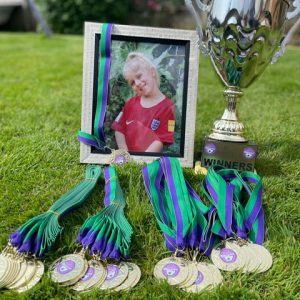
Emma died in December 2025. She was loved beyond words and is missed every single day yet her legacy lives on. It lives on in Claire, who will grow up hearing stories about the remarkable big sister who adored her. It lives on in the family, friends, nurses, doctors, teachers and countless others whose lives she touched. Emma faced more in her short life than most people face in a lifetime. Yet she met every challenge with a courage and resilience that never stopped amazing us.